The Cà Luisa project in Veglio
The Cà Luisa project in Veglio (Piemont)
Inspiration is to be found in every alley and every ruin, in every stone and in every direction. Veglio not only inspires artists and the culture-minded; those embracing simplicity will also find themselves rewarded.
The Cà Luisa guesthouse offers space for short and long stays; intended for artists of any discipline, it can be used by individuals or groups. The Association Cultiviva has dedicated itself to the cultural revival and enrichment of remote regions and now wants to buy this house with your financial support.
VEGLIO – the hamlet
The place name derives from the Latin vigilia – a place of vigilance. The ruins of the C11th Romanesque keep indicate how access to the Valle Antigorio was guarded and defended from Veglio.
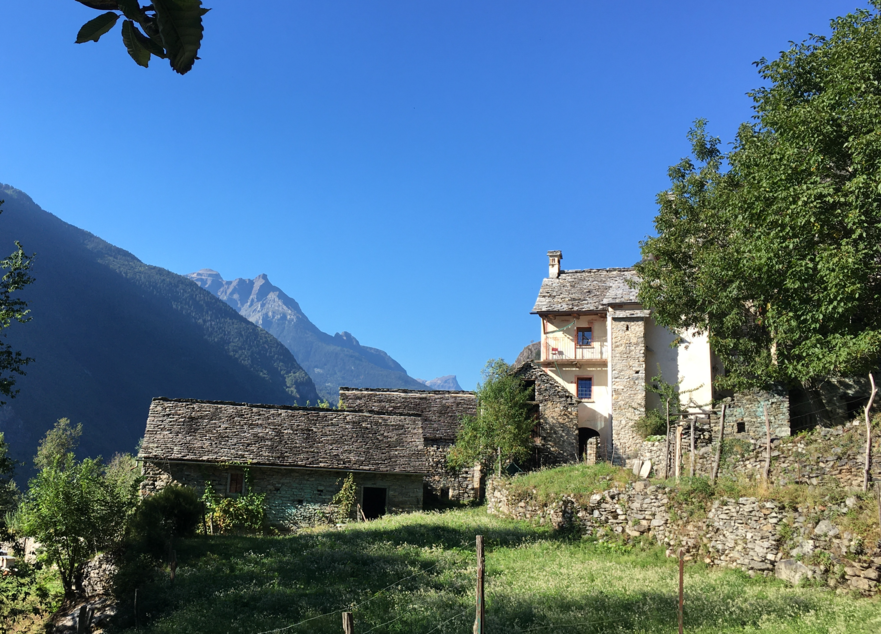
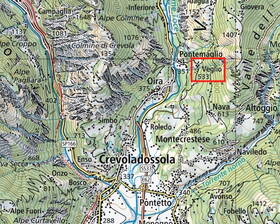
The picturesque hamlet of Veglio is part of the municipality of Montecrestese and is located in the Italian Alps about 10km from Domodossola. In the 1960s, the municipality imposed a ban on living in Veglio, fearing an imminent rockfall. The fateful landslide never took place, but the abandoned houses were damaged and agricultural land began to deteriorate. From a contemporary point of view, the evacuation of the hamlet some 60 years ago is a blessing in disguise, however. While many wonderful buildings have partially collapsed, there is not a single new building in the hamlet. The charisma of Veglio is like something from a fairy tale.
Decades later, the danger of any rockfall was refuted and Veglio has been officially inhabited since 2019 when two young couples decided to bring the hamlet back to life. Since then, several houses have been carefully renovated and a pioneering agricultural project is successfully growing. Thanks to this commitment, the landscape once overgrown with thorns and forest is now experiencing a significant upgrade – all pursued and highly appreciated well beyond the hamlet’s municipal boundaries.
CÀ LUISA – the house of Maria Luisa
The house used to be inhabited by the Senestraro family in the summer months when the animals and men were up on the mountain pastures or in the alps. Maria Luisa Senestraro remembers how, as a child, she used to walk from Veglio to bring food, wine and grappa to her father. On the way back she always carried back one or two wheels of cheese for her mother. She doesn't always like to think back to that time though because she would have preferred to go to school for longer.
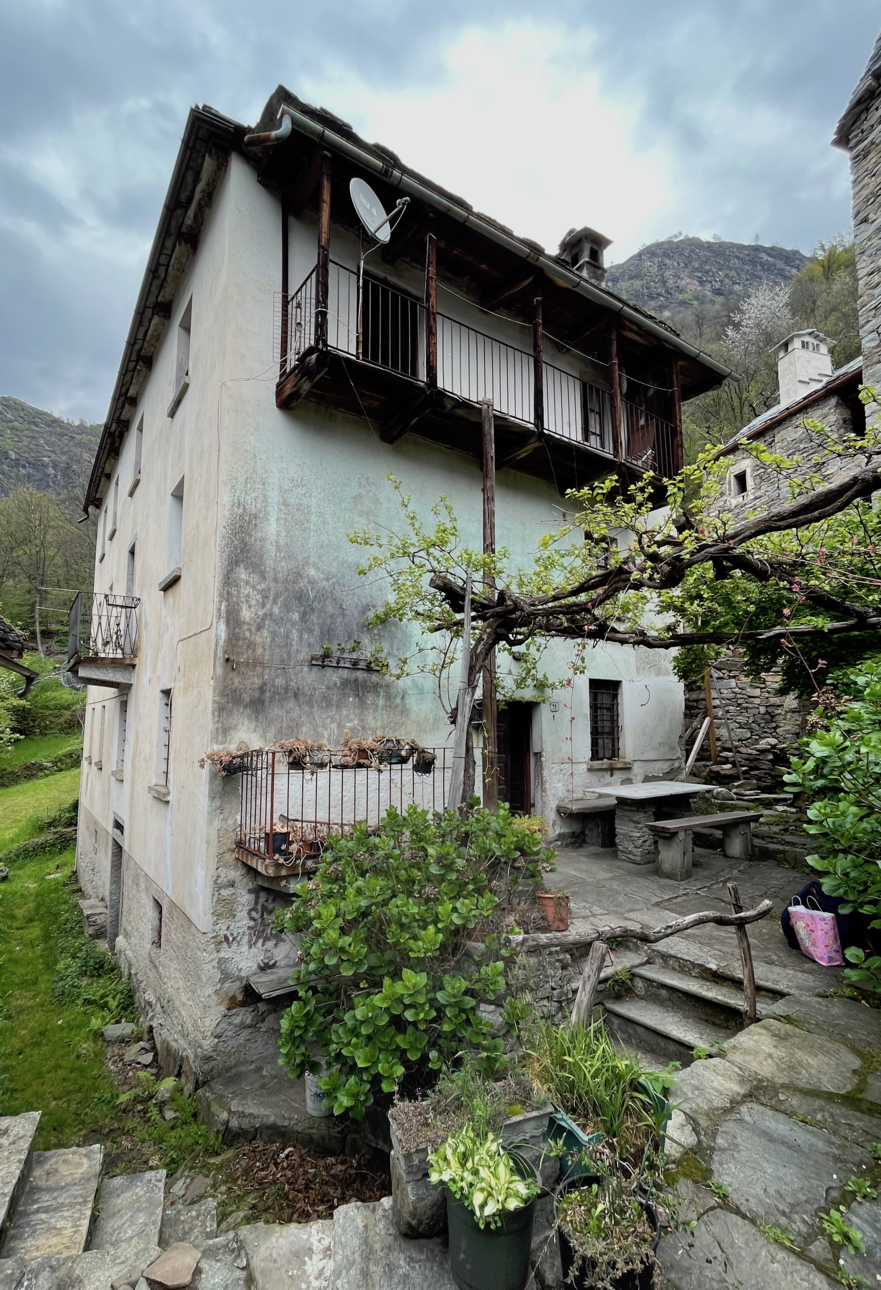
Maria Luisa continued to use her house as a holiday home even after the resettlement order was enforced; for years, she fed many visitors and guests there. She is a funny, lively woman who, for reasons of age, now has to sell her house. Because the new but still small community had already used her house several times for music ensembles, Maria Luisa informed them in confidence about the prospective sale. Recognizing this to be a unique opportunity for expanding the cultural life of Veglio, Céline Müller told a few acquaintances about the opportunity, five of whom were immediately enthusiastic about the idea. It’s this group which now wants to buy Cà Luisa and has founded the Association Cultiviva for this purpose.
With older parts from the C14th/15th and newer parts from C19th, the house is soundly built with a solid stone roof. Cà Luisa is ready for use. Sanitary facilities have been overhauled and additional structural renovations will be determined once the house is being used regularly. Across four usable floors the house comprises a vaulted cellar, two common rooms with fireplaces, a small, rustic kitchen, a bathroom with toilet and shower, six bedrooms, a seating area directly in front of the house, and an outdoor toilet. Cà Luisa will be simply but functionally refurbished.
Cà Luisa is intended to be a space where creative people can find an oasis for devoting themselves to their activities. Music, visual arts, literature, dance etc. can unfold in direct contact with nature and while experiencing the pioneering settlement’s impressive landscape. Seclusion is a valuable prerequisite for concentrated work.
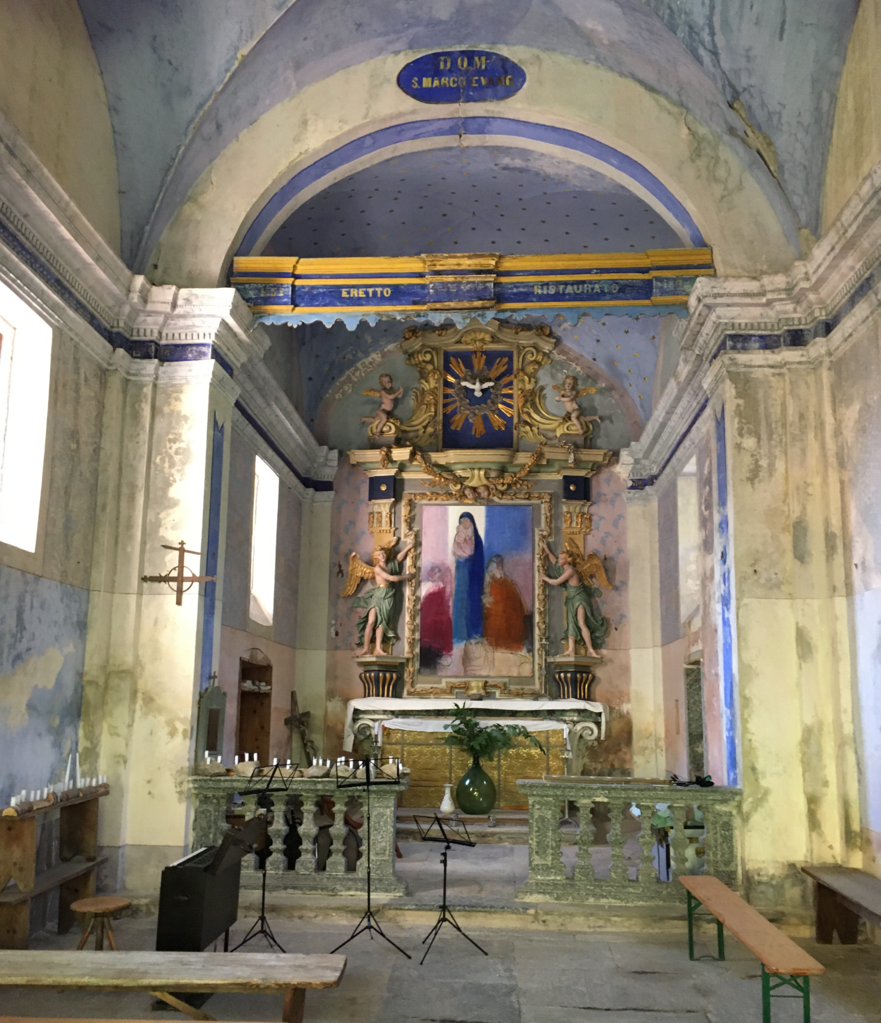
If visitors want to organize musical ensembles, dance groups or other team projects, there are various additional, season-dependent places available in Veglio: the C16th church (Oratorio San Marco), a rustic barn, a heated common room – and of course the great outdoors.
Veglio & Cà Luisa - Fotos
CULTIVIVA – the association behind the project
The Association Cultiviva is exclusively non-profit. Cà Luisa is the association’s first project, providing affordable stays for artists and thus promoting creative work.
The association will ensure financing for the purchase Cà Luisa; it will also be responsible for drawing up the regulations for the use of the house. In due course, locally based organizations will operate the Cà Luisa but the association will continue to own the house.
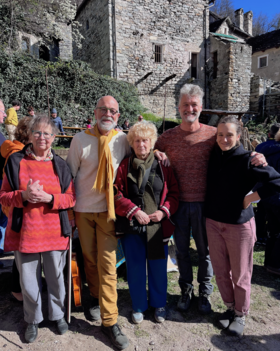
Maria Luisa between the members of the board (f.l.t.r. : Sabine, Lorenz, Maria Luisa, Michael, Céline)
ARRIVAL – by car or public transport
Car: The last 2km of access road are poorly maintained but can be used at people’s own risk. The municipality is committed to surfacing the road, although the schedule for this work is uncertain.
Public transport: Domodossola is easily reached by train and is within the SBB’s Half-fare and General Abonnement zone. From Domodossola there are some bus connections (cash in Euros needed) for reaching the vicinity of Veglio. The walk onwards to Veglio is 20 minutes to an hour depending on whether one chooses the gentle or steep uphill path.